
Confirm your age
Please verify that you are 18 years of age or older to enter this site.



Last Updated: August 22, 2026
The honest answer is no, you don't strictly need bar tools to make cocktails. But what you really need is a way to mix drinks properly, measure accurately, and serve them well. At Letterbox Cocktails, we understand that not everyone wants to invest in equipment before trying their first drink. So let's talk about what actually matters when you're getting started, what you can skip, and when it's worth spending a bit more.

The difference between a brilliant cocktail and a watered-down mess comes down to technique and precision. You can make good drinks with improvised tools, but proper bar tools exist for a reason: they make the job easier, faster, and more consistent. If you're hosting friends or making drinks regularly, they're genuinely worth having.
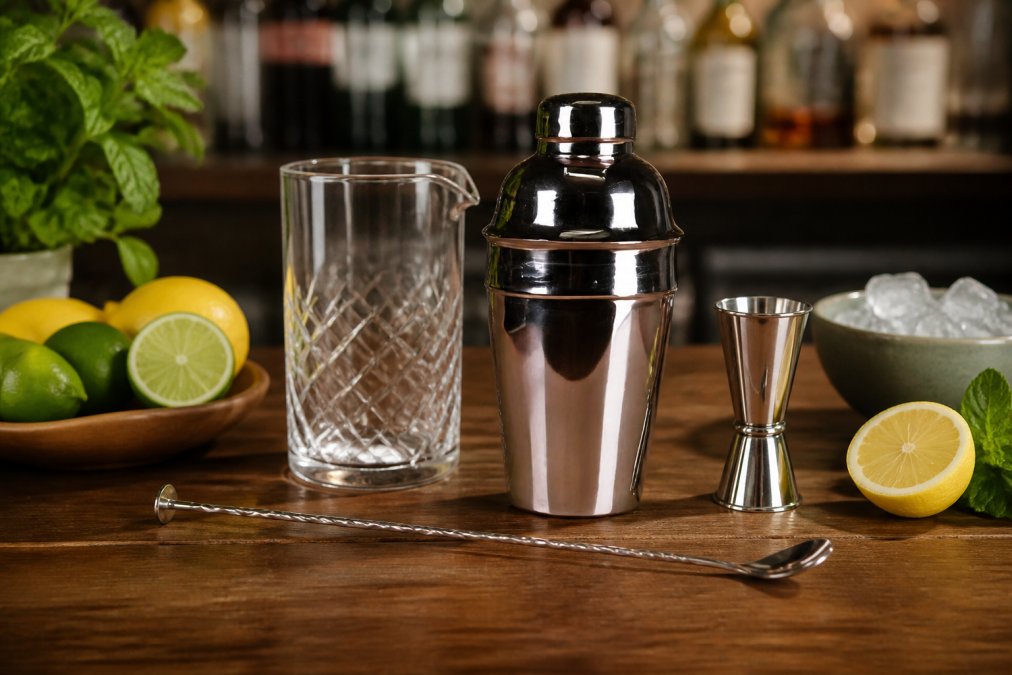
When building a home bar, you don't need everything at once. Three tools handle almost every cocktail: a shaker, a jigger, and a strainer.
A cocktail shaker is where the magic happens. Without one, you're limited to stirred drinks, which rules out daiquiris, margaritas, and sours.
There are two main types: the Boston shaker (two metal cups that fit together) and the cobbler shaker (all-in-one with built-in strainer). Bartenders prefer Boston shakers for speed, but cobblers are friendlier for beginners. Both work equally well.
When you shake a cocktail, you chill it, mix ingredients thoroughly, and aerate them slightly. A proper shaker accomplishes this efficiently. The Letterbox Cocktails cocktail shaker is stainless steel, designed for home use, and pairs perfectly with our 275ml bottles.
A jigger is a small measuring cup with two ends, typically 25ml on one side and 50ml on the other. It's the difference between a cocktail that tastes right and one that doesn't. Precision matters because cocktails are formulas. A jigger removes the guesswork and costs very little.
After shaking, you need to strain the cocktail into a glass. Most shakers come with a built-in strainer, but if yours doesn't, you'll need a Hawthorne strainer or fine mesh strainer.
A mixing glass is used for stirred cocktails like martinis and Negronis. Any sturdy drinking glass works if you don't have one yet, though a proper mixing glass is thicker and handles temperature changes better.
Understanding the difference between shaken and stirred cocktails tells you whether you actually need a shaker.
Shaking aerates the drink, creates tiny ice particles that chill it quickly, and emulsifies ingredients like citrus juice and cream (peer-reviewed research). Stirring keeps a drink silky and strong by chilling it gently without adding air.
Drinks that need shaking: anything with citrus juice (daiquiris, margaritas, sours), anything with cream or egg white (Pisco Sours, Whiskey Sours), and anything with multiple ingredients that need thorough mixing.
Drinks that are stirred: spirit-forward cocktails like Negronis, martinis, Manhattans, and Sazeracs. These are mostly alcohol with just a splash of something else. Stirring keeps them cold and concentrated.
If you only want to make stirred cocktails, you need a glass, a long spoon, and ice. That's it.
Mason jar or jam jar with a tight lid: Fill it with ice, add ingredients, seal tightly, and shake for about 10 seconds. Strain through a fine mesh strainer. This works, but glass doesn't conduct cold as efficiently as metal, so your drink ends up slightly warmer than it should be. For a cocktail that should be served at around 4°C, that's noticeable (peer-reviewed research).
Cocktail shaker bottle: These are practical for beginners and portable, but they're not as efficient as a proper shaker. They hold less ice, conduct cold more slowly, and the seal is often weaker.
Two drinking glasses: Some people seal one glass inside another and shake. This is risky, glasses can slip, crack, or break if you shake too hard. Not recommended.
Blender: A blender will mix and chill a cocktail, but it adds air and breaks ice into tiny fragments, changing the texture. Use it only for frozen cocktails where that texture is intentional.
If you're making cocktails once or twice, improvising is fine. If you're making them regularly or serving guests, a proper shaker is worth it. The difference in temperature, consistency, and taste is real. [EXTERNAL_LINK: Consider hiring a mobile bartender for private parties | kccocktailcoconcepts.com].
For most people starting out, stick with stirred cocktails until you're ready to buy a shaker. A Negroni, martini, or Manhattan taste brilliant and require nothing more than a glass and a spoon. Once you've made a few and know you enjoy it, invest in a shaker and unlock the whole world of shaken drinks.

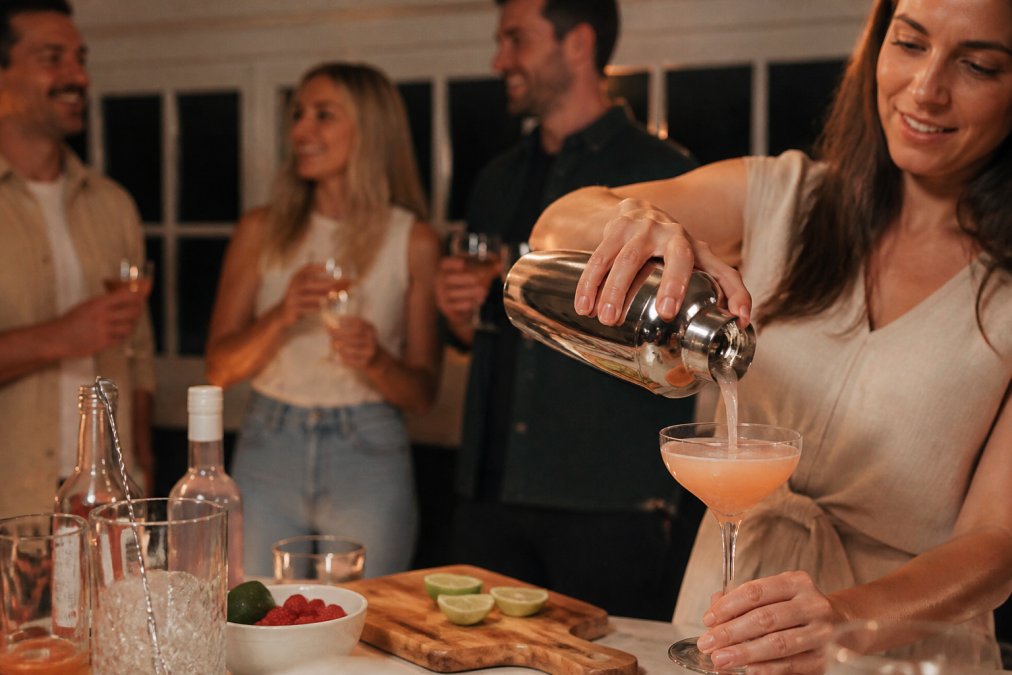
Hosting people who expect a proper drink is different from making one for yourself. You need to think about speed, consistency, and presentation.
Do everything you can before people arrive. Chill your glasses in the freezer for at least 30 minutes. Pre-measure your ingredients into small bottles or jars if you're making the same drink for everyone. Cut your citrus and arrange it nicely. Fill your ice bucket. Have your garnishes ready.
The goal is to spend less than two minutes per drink once guests are there. Preparation is where the real work happens.
If you're making multiple different drinks, pick two or three and stick with them. Most guests are happy with a good version of one drink rather than a mediocre version of their first choice.
A cocktail is as much about how it looks as how it tastes. A proper glass, a good garnish, and care in presentation make all the difference. If you're serving Letterbox Cocktails ready-made drinks, the presentation is already handled, they arrive beautifully packaged and ready to serve.
Use the right glass for the drink. A martini in a coupe glass looks elegant. A margarita in a highball glass looks wrong. A daiquiri should be served up in a small glass, not over ice in a tumbler.

A garnish isn't decoration, it's part of the drink. A twist of citrus peel oils the surface and adds aroma. A mint sprig releases fragrance when you take a sip. A cherry or olive is part of the flavour profile.
You don't need to spend much to get started. A basic home bar kit with the essentials, a shaker, a jigger, a bar spoon, and a strainer, is enough to make almost any cocktail.
The Letterbox Cocktails cocktail shaker is a great entry point. Pair it with a basic jigger and a bar spoon, and you've got everything you need. Add a mixing glass if you want to make stirred drinks, but any drinking glass works fine to start.
The temptation is to buy a fancy kit with 15 tools you'll never use. Resist that. Buy three things, use them until you're confident, then add more if you want them.
If you're not sure whether you'll actually make cocktails regularly, start even smaller. Borrow a shaker from a friend. Use a jar. Try a few drinks and see if you enjoy it. Then invest if it makes sense.
There's a point where cheap tools become frustrating. Quality isn't just a price tag, it's about how a tool actually works and how long it lasts.
A cheap shaker often doesn't seal properly, leaks when you shake, or dents easily. A good one seals tight, feels solid in your hand, and lasts for years.
Look for these signs of quality:
Seamless construction: A shaker made from one piece of metal is stronger and more reliable than one with welded seams. Seams can weaken over time and eventually leak.
Weight and thickness: Pick it up. A quality shaker feels substantial, not flimsy. Thin metal dents easily and conducts cold less efficiently.
The seal: If it's a Boston shaker, the cups should fit snugly together with a slight twist. If it's a cobbler shaker, the lid should screw on smoothly and seal without forcing.
Stainless steel, not aluminium: Stainless steel is more durable, doesn't corrode, and conducts cold better.
A cheap jigger often has rough edges inside, making it hard to pour cleanly, or the measurements are inaccurate.
Look for:
Smooth interior: Run your finger inside. It should feel smooth, not rough or pitted.
Clear markings: The measurement lines should be engraved or printed clearly so you can see them easily in dim light.
Balanced weight: A jigger should feel balanced in your hand. If it's too light, it's probably thin metal that will dent.
Stainless steel: Better than aluminium.
A cheap bar spoon bends easily or has a flimsy handle. A good one is rigid and feels solid.
Look for:
Rigidity: Stir vigorously in a glass of ice. The spoon should not flex or bend.
A twisted handle: Many quality bar spoons have a twisted or spiral handle, making the spoon easier to grip and rotate smoothly when stirring.
Weight distribution: The bowl of the spoon should be weighted slightly so it doesn't feel top-heavy.
Length: A proper bar spoon is 30-35 cm long, long enough to reach the bottom of a mixing glass without your hand getting wet.
If you're serving cocktails regularly, investing in proper glassware is worth it. A cheap glass feels thin and looks cheap. A proper cocktail glass feels good in your hand and enhances the whole experience.
Look for:
Weight and thickness: Pick up the glass. It should feel substantial, not fragile. Thick glass conducts cold better and feels more premium.
Crystal vs. standard glass: Crystal contains lead oxide, which makes it sparkle, feel heavier, and conduct cold more efficiently. Standard glass is cheaper but feels thinner and less elegant.
The rim: Run your finger around the rim. It should be smooth, not sharp or rough.
Balance: The glass should feel balanced in your hand, not top-heavy.
Proper cocktail glasses will last for years and genuinely improve the drinking experience.
A cheap shaker that leaks wastes ingredients and your time. A cheap jigger with inaccurate measurements means your drinks taste inconsistent. A cheap bar spoon that bends is frustrating to use. These aren't minor annoyances, they make the whole process less enjoyable and less reliable.
You don't need expensive tools, but you do need ones that work reliably. Mid-range options will serve you well for years.
You don't absolutely need bar tools to make cocktails. You can improvise, you can stir instead of shake, you can use whatever glasses you have. But if you're going to make drinks regularly or serve them to guests, proper tools make the experience better for everyone.
Start with the essentials: a shaker and a jigger. Add a bar spoon and a strainer. If you enjoy it, invest in good glassware. The Letterbox Cocktails cocktail shaker is an excellent starting point, reliable, and designed specifically for home use.
But here's the thing: if you'd rather skip the equipment altogether, that's what Letterbox Cocktails is for. Our ready-to-drink cocktails arrive beautifully packaged, perfectly mixed, and ready to serve. No shaker required. No measuring. No mess. You get the bar experience without any of the work, and you can focus entirely on enjoying the drink and the company.
Yes, you can make basic cocktails with everyday kitchen items. A jar with a lid works as a shaker, a measuring cup or shot glass replaces a jigger, and a spoon substitutes for stirring. However, proper bar tools give you better control over measurements and mixing, which affects flavour and consistency. If you're making cocktails regularly, investing in at least a shaker and jigger improves results noticeably.
Start with three items: a cocktail shaker (Boston or cobbler style), a jigger for measuring, and a bar spoon for stirring. These handle 90% of cocktail recipes. A mixing glass and strainer come next if you enjoy stirred drinks like martinis. Everything else—peelers, tongs, muddlers—is nice to have but not essential for starting out.
Not really. A shaker works for shaken cocktails (daiquiris, margaritas, sours), and a mixing glass with a bar spoon handles stirred drinks (martinis, negronis, old fashioneds). The main difference is technique, not equipment. Once you have a shaker and mixing glass, you can make most classic cocktails at home.
A proper cocktail shaker like our stainless steel option (£8.00) makes mixing easier and faster, keeps your hands dry, and looks professional. Jars work, but they're slower, harder to seal properly, and less reliable. If you're hosting guests or making cocktails regularly, a real shaker saves time and improves the drinking experience.
This article was written using GrandRanker
Share


£19.95 GBP
Unit price per